
Natalie Porter
PowerShift Contributor
First Published Q2 2025
Every month, utilities send out millions of electric & gas bills. For many customers, it’s the only time they interact with their utility. Bills are meant to answer a simple question for customers: What am I paying for? And yet, many people still find their bills confusing, overwhelming, and even misleading.
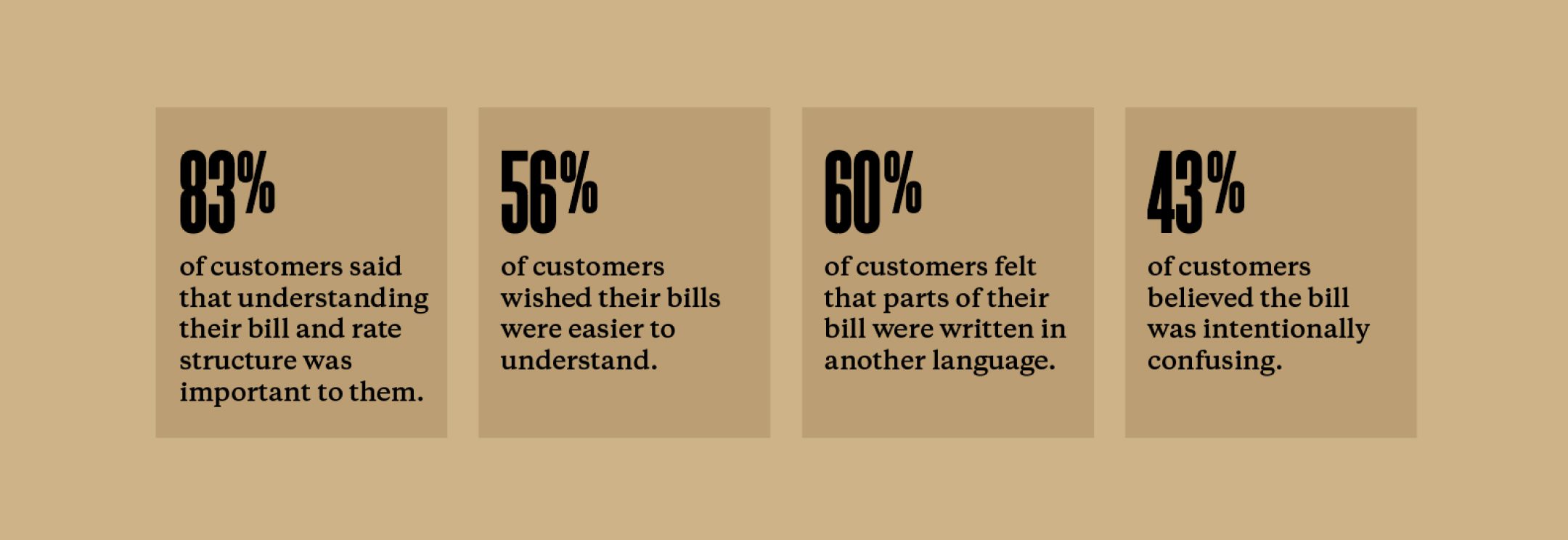
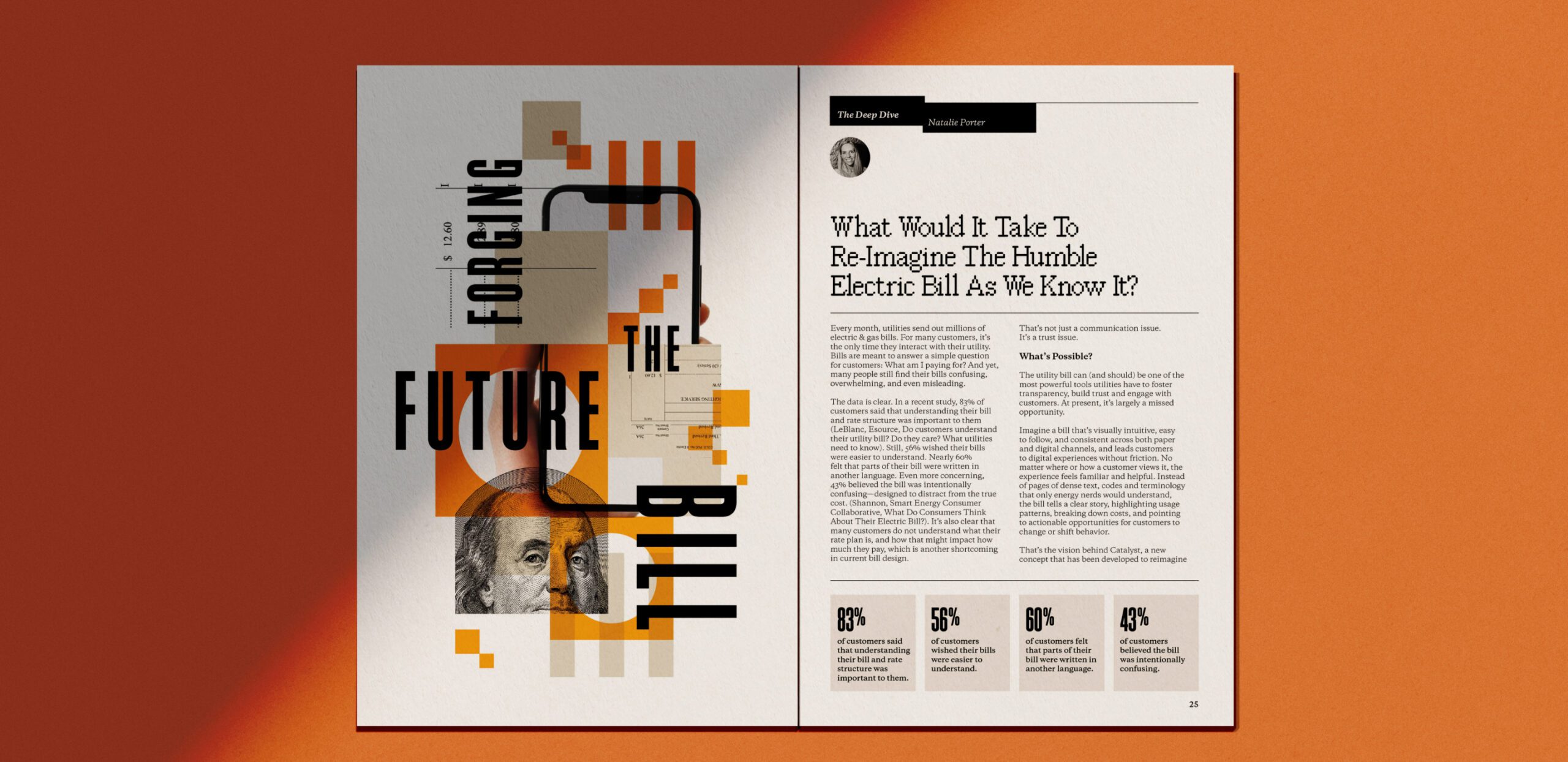
The data is clear. In a recent study, 83% of customers said that understanding their bill and rate structure was important to them(LeBlanc, Esource, Do customers understand their utility bill? Do they care? What utilities need to know). Still, 56% wished their bills were easier to understand. Nearly 60% felt that parts of their bill were written in another language. Even more concerning, 43% believed the bill was intentionally confusing—designed to distract from the true cost.(Shannon, Smart Energy Consumer Collaborative, What Do Consumers Think About Their Electric Bill?). It’s also clear that many customers do not understand what their rate plan is, and how that might impact how much they pay, which is another shortcoming in current bill design.
That’s not just a communication issue.
It’s a trust issue.
What’s Possible?
The utility bill can (and should) be one of the most powerful tools utilities have to foster transparency, build trust and engage with customers. At present, it’s largely a missed opportunity.
Imagine a bill that’s visually intuitive, easy to follow, and consistent across both paper and digital channels, and leads customers to digital experiences without friction. No matter where or how a customer views it, the experience feels familiar and helpful. Instead of pages of dense text, codes and terminology that energy nerds would understand, the bill tells a clear story, highlighting usage patterns, breaking down costs, and pointing to actionable opportunities for customers to change or shift behavior.
That’s the vision behind Catalyst, a new concept that has been developed to reimagine what billing can look like when the full power of GridX’s platform is applied. Developed as part of a design exploration, Catalyst challenges the idea that a paper bill and a utility’s digital account portal should offer totally different experiences. Why should they? With GridX’s platform, covering the entire rate lifecycle from design to billing to customer experience, it doesn’t have to be that way.
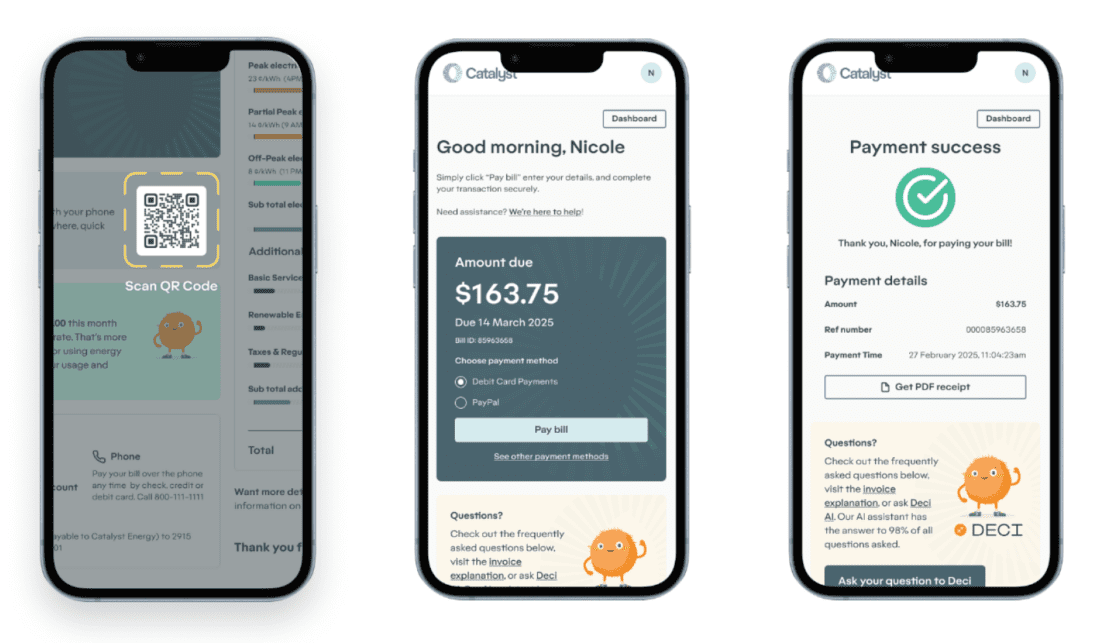
At its core, Catalyst has a clear priority: make it easy for customers to understand their energy usage, connect how that relates to their various bill charges, and enable them to take meaningful action. The amount due is front and center, paired with a QR code that allows for quick guest payments and the ability to interact with the charts and graphs presented on the bill visually, no authentication required.
Bill details break down charges in a transparent, visual format. And thanks to GridX’s Empower APIs and rate comparison tools, the bill can even assess whether a customer is on the best plan for their usage, reducing confusion and unnecessary calls to the call center.
What makes this approach so impactful is consistency. If a utility also has GridX Explore, the online experience would look the same because the paper bill design features some of the most common Explore “widgets”, but in bill form.
The back of the Catalyst bill includes the rate explanation “widget”. Most customers don’t understand the rate they’re on, but this tool makes it digestible, actionable, and personalized. A simple tooltip at the bottom provides specific advice for how a customer can adjust their behavior to get more value from their rate.
To deepen understanding and trust, the Catalyst bill also includes a comparison view, showing how the current bill stacks up against the previous month. Alongside that, the Bill Forecast widget reveals the connection between weather, usage, and cost, answering the inevitable question after extreme weather events like heatwaves, polar vortexes, and similar: Why was my bill so high?
Looking ahead, Catalyst offers bill forecast information to customers, offering a proactive look at what next month’s bill is trending towards, based on current usage, weather trends and other factors. This kind of visibility helps customers plan, manage, and engage more deeply with their energy usage.
QR codes also appear throughout, not just for payment but to allow customers to instantly access interactive, digital versions of each widget. Because the data displayed isn’t sensitive, it doesn’t require authentication—eliminating one of the biggest barriers to digital engagement.
Ultimately, the Catalyst bill isn’t just a redesign. It’s a demonstration of what’s possible when we stop thinking of the bill as paper and start thinking of it as a digital gateway to the future of customer experience.


“That’s the vision behind Catalyst, a new concept that has been developed to reimagine what billing can look like when the full power of GridX’s platform is applied. Developed as part of a design exploration, Catalyst challenges the idea that a paper bill and a utility’s digital account portal should offer totally different experiences.“
Why is Current Billing so Complicated?
So why haven’t more utilities embraced more of this kind of innovation?
The biggest challenge lies behind the scenes. Most utilities still rely on legacy Customer Information Systems (CIS) that were designed decades ago. These systems were built to serve accounting and regulatory needs, not to support modern customer-facing communication. They’re inflexible, slow to change, and often incompatible with the kind of design thinking needed to create a better bill.
Layered on top of that is the increasing complexity of rate structures themselves. As the grid evolves, rates are becoming more dynamic, reflecting time, demand, and behavior. That complexity is necessary but it makes creating a clear, digestible bill even more difficult. Utilities are stuck between the need to be transparent and the risk of overwhelming their customers with too much detail.
The Road Ahead
Despite the challenges, change is both possible and necessary. Customers are asking for clarity and transparency. They want to feel informed and in control of their energy usage and costs. If we want customers to actively engage in energy programs, adopt new technologies, or simply trust their utility, then we need to start with the basics, and the bill is a great place to begin.
Reimagining the utility bill is about building trust and earning engagement with customers via easy-to-understand, accurate information that gives them the opportunity to take control of their utility experience. It’s about transforming an often challenging, sometimes ignored document into something that’s genuinely useful, empowering and transparent.
The Catalyst concept brings together everything GridX offers, penny-level accurate billing, seamless CX tools, and full lifecycle rate management into a single, unified customer experience. It’s more than just a better bill. It’s a smarter, more strategic connection between the utility and the customer intended to improve outcomes for all parties involved.
Get the Digital or Physical Magazine.
