Innovative rates are helping utilities navigate the electricity boom
Scott Engstrom of GridX explains how utilities are using sophisticated rate structures to turn customer flexibility into a grid resource.


Scott Engstrom of GridX explains how utilities are using sophisticated rate structures to turn customer flexibility into a grid resource.
Sign up for our magazine
The premier outlet for compelling storytelling around the innovators and innovations driving the clean energy transition.
Utilities are transforming one of their most fundamental tools — rate design — to tackle the challenges of America’s electricity boom.
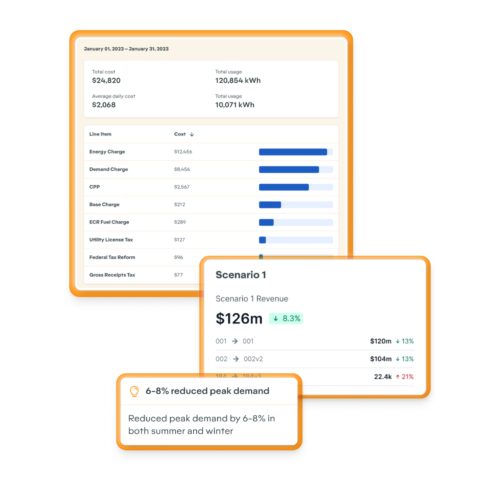
What was once primarily a mechanism for collecting revenue has transformed into an ecosystem of sophisticated solutions. New rate structures are enabling new programs for distributed energy resources and demand flexibility, helping customers get engaged by offering compensation for participating in grid management.
Scott Engstrom has watched this transformation unfold from the front lines. As co-founder and chief customer officer at GridX, he’s spent the past decade helping utilities design and implement rates that do more than just collect revenue, but actively shape how and when customers use electricity.
It’s a timely shift in customer engagement and billing, as utilities are facing massive demand growth from electrification and the booming AI economy. Data centers alone accounted for about 4.4% of total U.S. electricity in 2023 and are projected to consume between 6.7% and 12% by 2028, with load growth tripling over the past decade. This surge is forcing utilities to rethink fundamental assumptions about how electricity is priced and consumed.
“We believe that end customers have to know more about the cost of energy, and how they use energy impacts utility’s ability to change the energy they supply to their customers,” Engstrom explained during a recent interview on the With Great Power podcast. “Our mission is to help our clients, like utilities, and their customers understand the exact value of their clean energy choices.”
But the industry’s challenge isn’t just growing demand—it’s also the changing nature of resources on the grid.
For example, data centers represent big, consistent loads that need reliable power around the clock. But distributed energy resources—solar panels, batteries, electric vehicles, and smart thermostats— are smaller, and much more flexible. The challenge is resolving the dichotomy presented by these two trends.
Engstrom sees dynamic rates and pricing as a solution to this challenge, if current utilities are willing to evolve their current mindset.
“There’s a lot of systems out there that manage the meter to cash business process for utilities,” Engstrom said, referring to traditional billing systems. But the emergence of time-of-use rates and distributed energy resources created “the opportunity really to help utilities with a different cycle, which we call the utility product or rate lifecycle.”
This lifecycle approach treats utility rates more like consumer products. They need to be designed, tested, marketed, and continuously optimized. “We did really want to get the utilities to change their mindset and think about themselves as more of a product company,” said Engstrom. “More products and services were going to be needed to meet the kind of decarbonization and electrification goals that they were trying to achieve.”
And this approach can work. One of GridX’ California utility clients leveraged the company’s rates and customer engagement expertise to shave peak load during the 2022 heat waves. “On one of the peak days, customers responded to that price signal in the time of use rates to reduce load by 75 megawatts,” Engstrom said. That was equivalent to the utility’s third largest demand response program.
As demand continues to grow, this kind of customer engagement isn’t just helpful—it’s essential for meeting unprecedented load growth without building massive new infrastructure.
“As more and more customers have put distributed energy resources behind the meter, it just creates a lot more variability on the system,” Engstrom noted. And while traditional demand response programs can be “pretty clunky, expensive to administer,” time-of-use rates “can be a much more simple, elegant solution.”
Engstrom noted that because many customers have flexibility in how they use energy, they would welcome incentives to shift usage when it helps the grid. “If I was a business or a residential customer with an electric vehicle, I’d be happy to take advantage of that opportunity and reduce my utility bill,” he said.
Engstrom sees this flexibility—enabled by smart rate design— as an alternative to building expensive new power plants to meet surging demand. “Demand flexibility and programs and rates that are structured in the right way can deliver a lot of benefits both to the customer and to the utility and the grid,” he said.
For the full conversation with Scott Engstrom, listen to his interview on With Great Power here.
With Great Power is a show about the people building the future grid, today. It’s a co-production of GridX and Latitude Studios. Subscribe on Apple, Spotify, or anywhere you get your shows.
Read the original article from Latitude Media here.