The future of optimized EV charging
Nick Woolley, ev.energy CEO, says evolving charging technology can make EV charging an opportunity, not a burden.

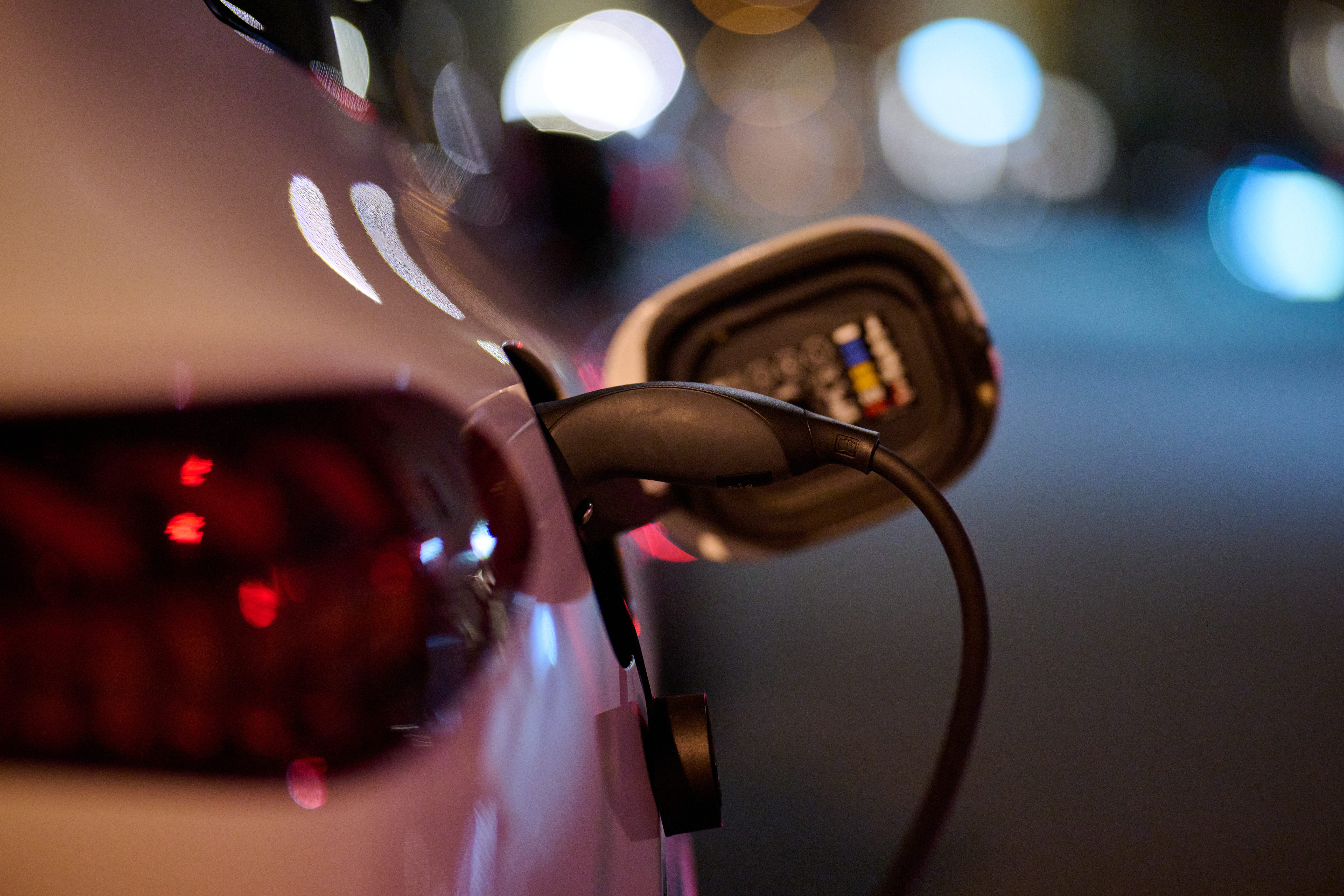
Nick Woolley, ev.energy CEO, says evolving charging technology can make EV charging an opportunity, not a burden.
Sign up for our magazine
The premier outlet for compelling storytelling around the innovators and innovations driving the clean energy transition.
As the September 30 deadline for federal tax incentive for new electric vehicles neared, buyers eager to claim the $7,500 credit streamed into dealerships across the country.
“It’s been bonkers,” Matt Jones, the senior director of industry relations at the auto marketplace TrueCar, told NPR late last month. Tesla and other EV car makers reported record third-quarter sales.
Now, as the industry braces for slower sales, all these new EV drivers charging vehicles at home are increasing demand on electricity distribution infrastructure. And that demand is set to grow. Last year — before it was announced that the federal tax incentive would be rescinded — the Edison Electric Institute estimated 78.5 million EVs would be on U.S. roads by 2035. For years, the power sector has been studying how this increase in load demand might play out; a 2024 report by the Smart Electric Power Alliance called on the industry to act faster.
Meanwhile, EV drivers need to sort out how to integrate charging into their daily schedule, which according to Nick Woolley, CEO of charging management company ev.energy, “is basically the number one pain point about owning an electric vehicle.” He said on a recent episode of the With Great Power podcast that the company ev.energy sees a “massive opportunity” in making that easier for energy providers and the drivers who install at-home chargers.
EV drivers often set home chargers to begin powering their batteries outside peak demand, a move that can shift energy demand spikes to later in the day. That’s because “everybody then sets their electric vehicle to come on at like 11 p.m. and those secondary peaks can quickly exceed the primary peak that you were trying to mitigate,” Woolley explained.
The SEPA report highlighted the same concern. “Demand response and time-of-use programs tend to shift EV charging peaks from coincident bulk-system peak periods to secondary, snapback periods around 11 p.m. to midnight,” it said.
For context, managed charging comes in different forms. In passive systems, consumers can manually set their chargers to turn on outside of peak hours, or a connected demand response program might do the same. But to avoid a second “snapback” peak, active managed programs spread out charging to smooth demand on a given distribution system.
Woolley’s company, however, takes managed charging one step further. It uses real-time pricing signals from the local energy provider to dynamically optimize the EV’s electricity consumption in tandem with real-time electricity signals.
Together with ev.energy and two community-owned energy providers — Silicon Valley Clean Energy and MCE — the California Energy Commission is funding a pilot program in Northern California called ChargeWise California. The program is evaluating ev.energy’s dynamic pricing program. Initial results from October 2024 through May 2025 were released this summer, which showed that EV drivers saved an average of $200 a year by allowing the program to charge their EVs at optimal times. That’s compared to what they would pay to charge their vehicles during off-peak hours based on California’s time-of-use rates.
“The ChargeWise project is all about trying to ensure that electric vehicles are more responsive to those real-time signals that are available from the grid,” Woolley said. “Because the reality is, the grid at the moment, the signals that we get are relatively static. So we have fixed time of use rates that do not respond in real time to needs and issues that are happening on the grid.”
98% of all charging happened off-peak during the first phase of the program, which involved 1,000 participants, half of them from disadvantaged communities. A second pilot phase is in the works, Woolley said. This one will be significantly larger, with “ hundreds of thousands of electric vehicle owners.”
Woolley said that ev.energy’s analysis shows that if scaled across 75 million EVs — a bit under EEI’s estimate for U.S. EV adoption by 2035 — its technology could reduce energy costs by 10%.
But Woolley notes that this is just one part of a bigger set of solutions needed to address the challenge EVs will present at scale. Simultaneously charging 75 million EVs would create around 100 gigawatts of new load, he said, equivalent to the generating capacity of 25 nuclear power plants the size of Palo Verde Generating Station in Arizona.
As vehicle-to-grid technologies mature, that load will become a source of energy, too. “That is a colossal amount of capacity that we could unlock,” Woolley said. “And I think it’s on all of us within the energy industry to work in partnership to make that happen.”
For the full conversation with Nick Woolley, listen to his interview on With Great Power here.