Will utilities deploy next-generation meters to support a smarter, more flexible grid?
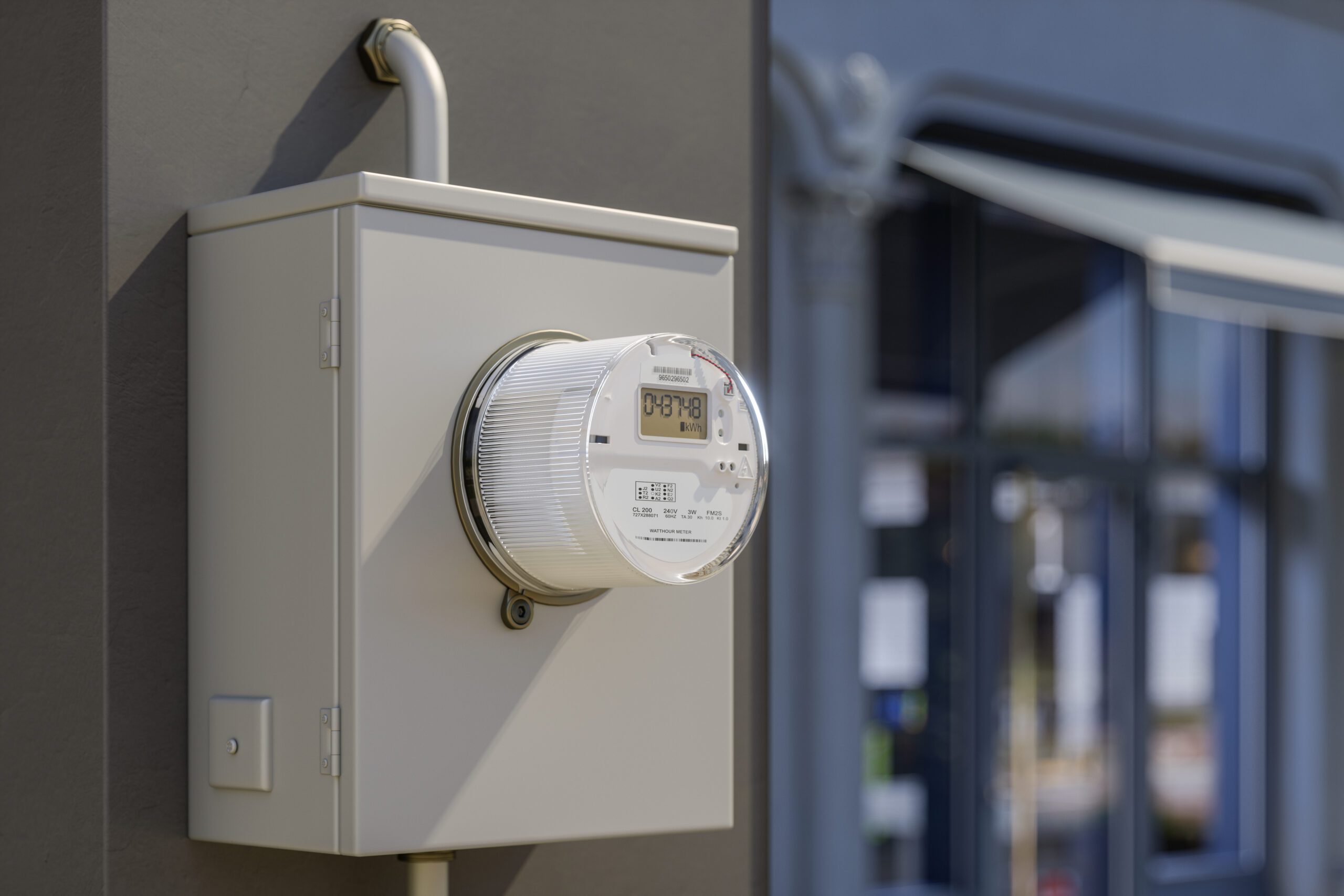
A Michigan trade group is pushing regulators and utilities to plan ahead for next-generation smart meters.

A Michigan trade group is pushing regulators and utilities to plan ahead for next-generation smart meters.
Sign up for our magazine
The premier outlet for compelling storytelling around the innovators and innovations driving the clean energy transition.
In the early 2000s, U.S. utilities began replacing analog electricity meters with so-called smart meters, which communicate with utilities wirelessly. This advanced metering infrastructure (AMI) enables a range of utility benefits, from automated meter reading to outage detection and more efficient power restoration.
AMI grew nationwide after 2009, thanks to federal funding through the American Recovery and Reinvestment Act. By 2022, 77% of U.S. homes and businesses had a smart meter installed, according to the Institute for Electric Innovation. Research shows that for utilities, the investment paid off.
In recent years, however, smart meter technology has advanced. Laura Sherman, president of the Michigan Energy Innovation Business Council, a trade association that advocates for clean energy policy in the state, wants the state’s energy providers to keep up with the newest technology, and to ensure it helps consumers save energy and money.
She called next-generation smart meters mini computers. “What we have now in Michigan is like a flip phone,” she said during a recent interview on the With Great Power podcast. Those “flip phones” are like smart meters 1.0, whereas newer 2.0 models are more like iPhones, and are capable of running applications too advanced for deployed smart meter 1.0 networks.
Now, as more advanced smart meters are becoming available, the EIBC wants Michigan’s utility providers Consumer Energy and DTE to develop a roadmap for upgrading those networks. “In Michigan, I think roughly 95% of residential customers now have [1.0] smart meters,” she said.
While smart meter 1.0 technology has helped utilities improve the accuracy and frequency of meter readings, ”it hasn’t done a good job of providing customer benefits,” Sherman said. She blamed some of that on poor planning and coordination with other service providers. But she also pointed to meters’ limited capabilities, saying they don’t always support applications that would help consumers lower their energy usage and spending.
Smart meter transition
Sherman isn’t alone. As utilities around the country start to upgrade to next-generation smart meters, industry watchers — including the hosts of the Open Circuit podcast — want to ensure that they’re capable of supporting distributed energy resources like virtual power plants and demand response programs.
That’s becoming more important as more consumers install battery storage in their homes, or switch to electric appliances like heat pumps and other devices that have Wi-Fi capabilities to connect to energy applications. Electric vehicle charging also highlights the use of smart meters and applications that control the flow of electrons based on rates and demand.
If it means you’ll pay a lower rate and reduce grid stress, “you don’t really care if the utility shifts the charging from right when you get home to midnight,” Sherman said. “As long as you have enough [charge] in the morning.” The same is true, she said, of heating water in a home. “If you take a shower, you just want the water to be hot, but you don’t care if the water heater turns on the minute you stop.”
Sherman pointed to National Grid as a utility that is deploying next-generation AMI and leaning into customer-facing benefits. In 2023, National Grid’s Transformation Programs lead Carlos Nouel noted that although data collection from earlier smart grid deployments was seamless for the utilities, it wasn’t frequent enough to unlock the visibility needed to support responsive applications.
“In the past, we just had 15-minute interval data, but as an industry claimed we had real-time information. The reality is, when you’re 15 minutes behind — and you might even push it every hour at best, or even every eight hours — that’s not real real-time,” he said.
Sherman said she would like to see regulatory oversight in Michigan that would push utilities toward proactive planning for upgrading to next-generation smart meters.
“ I don’t want [utilities] to make investments in things that are not going to work or that are going to become obsolete,” she said. “But I really think that if the utility is able to look at the full benefits, and the regulators are able to push them to look at the full benefits, I’m hopeful that we can move the conversation along.”
She warned that just investing in new meters without building clear business and use cases could lead to a second round of underutilized meters that fail to deliver new benefits to users.
“We need to better understand how the investments… are going to then benefit customers. It was a promise that was made with the first generation [smart meters] and it didn’t bear out.”
For the full conversation with Laura Sherman, listen to her interview on With Great Power here.
With Great Power is a show about the people building the future grid, today. It’s a co-production of GridX and Latitude Studios. Subscribe on Apple, Spotify, or anywhere you get your shows.
Read the original article from Latitude Media here.